Students test, break, and question real AI systems — and defend a position of their own in every single session.
Analytical thinking is the single most in-demand skill for the next five years, according to the World Economic Forum — 7 in 10 employers call it essential.1 It's what the people doing the hiring already say matters most for the workforce your students are about to join.
Students are already living in a world AI helps shape — their feeds, their homework, their sense of what's true — whether anyone's taught them to notice or not.
First Sight is built on the UNESCO AI Competency Framework for Students2 — the 2024 global standard for teaching young people how AI systems actually work.
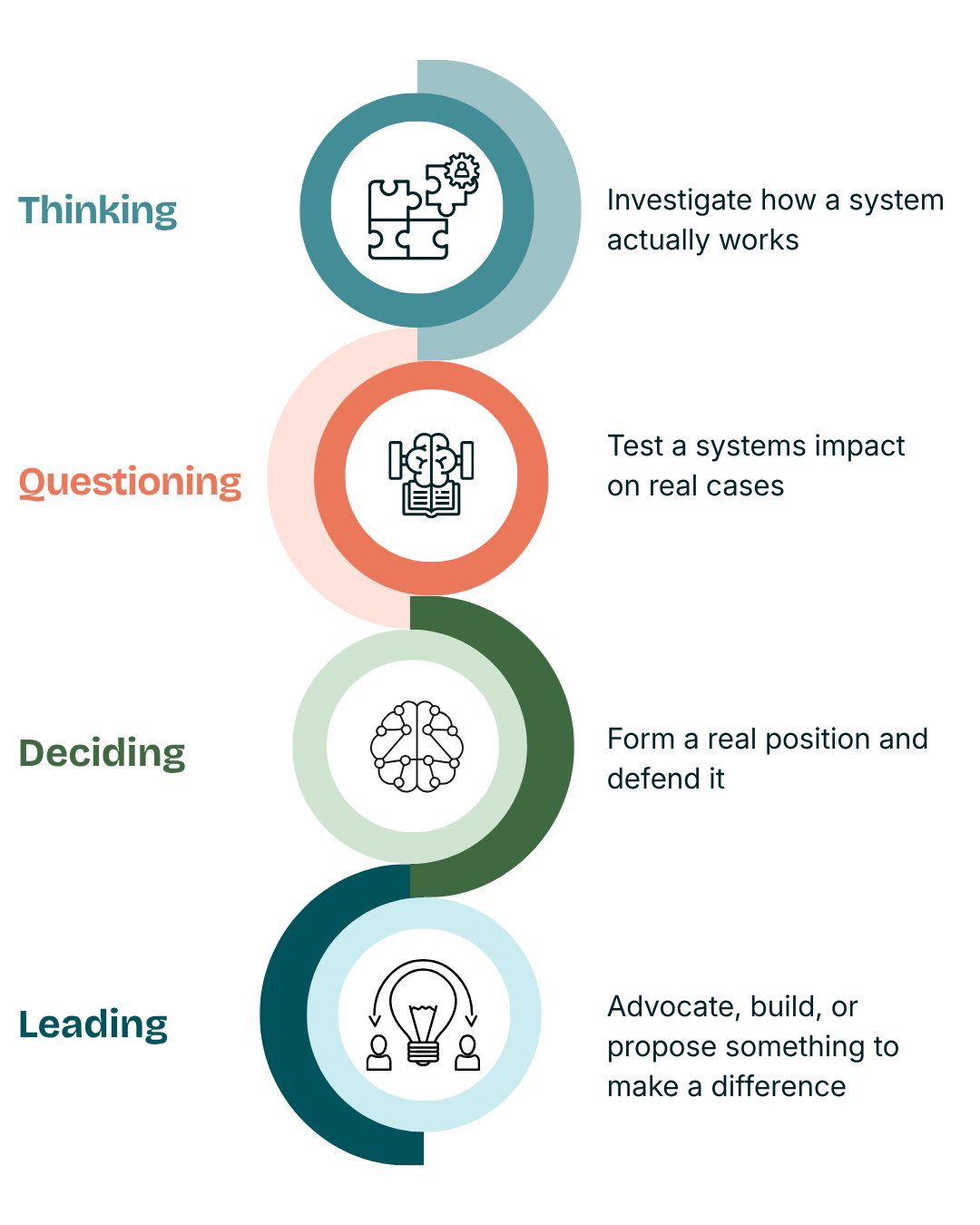
Each session starts with a challenge question to answer and ends by testing what students discovered.
Over six sessions, students investigate a single real-world AI system through four stages: Thinking, Questioning, Deciding, Leading.
By the end of the unit, this sequence becomes an instinctive habit for breaking down and questioning technology.
Students investigate whether a model actually learns what we intend, or just the easiest pattern available. They train a model, break it on purpose, and trace its unexpected failure points. By the end, they know how to question “the AI decided” instead of accepting it.
Students investigate their own feeds first. They map what recommendation algorithms feed them, then trace how misinformation moves in real time. Next, they look outward to audit digital equity: which tools quietly assume a certain language, internet speed, or budget? They test every question directly on their own devices.
Students audit five high-stakes AI decisions — from automated hiring and courtroom risk tools to facial recognition that led to a wrongful arrest. Grappling with the real trade-offs in each case, students discover that algorithmic fairness is never a setting you switch on.
In the capstone inquiry, students audit the broader footprint of AI. They investigate who builds these systems, calculate the energy cost behind daily models, and hold a structured debate over what should never be built. Finally, they take a stance: designing, defending, and presenting a student-led proposal to peers and invited guests.
Students examine how AI systems are designed, who they serve, and what happens when they fail at scale. They audit systems directly, debate the trade-offs, and build their own positions.
Apply →Curiosity-first inquiry for younger students. Built on the same core principle: experiment with the system before explaining the concept.
Join the Interest List →First Sight is built directly on UNESCO’s 2024 AI Competency Framework for Students2. Written specifically for school-age learners rather than engineers, it provides an independent, globally recognized blueprint for teaching how AI systems actually work.